

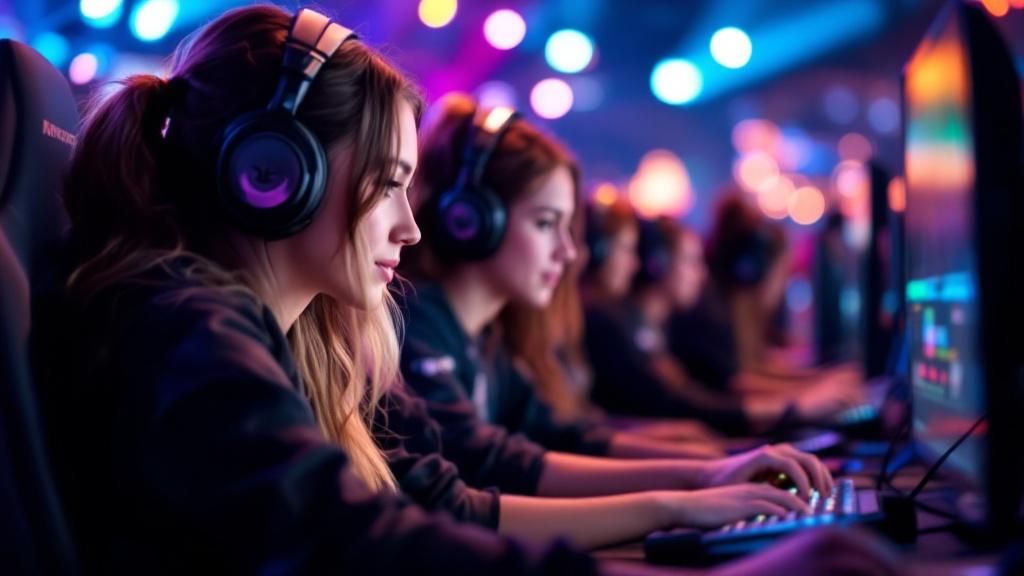
The esports industry, traditionally controlled by male players and audiences, is experiencing a remarkable transformation. Female gamers are actively challenging stereotypes and securing their rightful place at the highest competitive levels, from prestigious tournaments to lucrative sponsorship deals. This article explores how women are overcoming the glass ceiling in competitive esports, examining the barriers they’ve overcome, the pioneering players driving this movement, and what their success means for the future of competitive esports worldwide.
Growing Visibility of Women in Professional Esports
The terrain of esports competition has undergone a major shift over the last ten years. Female players have progressively demonstrated exceptional skill and dedication, earning recognition in competitions that were historically regarded as male-dominated spaces. This shift indicates broader changes within the gaming community, where skill and achievement are more highly regarded above sex. Top gaming organisations now deliberately seek out female participants, acknowledging both the business opportunity and the unexploited pool of gaming talent that women constitute in the sector.
Statistical evidence underscores this increasing visibility. Recent research indicate that women now constitute roughly 30 to 40 per cent of the international gaming market, yet their participation in professional esports remains considerably lower. However, this gap is closing rapidly. Competitions with female participants have achieved record viewership, showing strong audience demand for varied esports content. Commercial investment in women’s teams have risen substantially, suggesting that leading companies understand the market value and cultural importance of backing female esports players.
The visibility of accomplished women in gaming has created a powerful ripple effect across the gaming sector. Emerging female players now possess tangible role models to aspire towards, fundamentally changing views of gaming as a viable career path. Streaming platforms have amplified female voices, enabling talented players to develop substantial followings independently. This opening up of content creation has empowered women to bypass established gatekeeping structures and establish themselves as prominent voices within the esports ecosystem, encouraging the future wave of women in esports.
Organisational restructuring within major esports franchises have further accelerated women’s progression. A number of leading organisations have created women-focused squads, developed extensive training infrastructure, and introduced mentoring schemes carefully crafted to develop up-and-coming players. These institutional commitments signify genuine recognition that inclusive practices enhance competitive gaming. Additionally, regulatory authorities have begun establishing regulations promoting inclusivity, guaranteeing that competitions offer equitable opportunities for women’s involvement and equitable pay.
Despite substantial progress, challenges remain within the esports landscape. Online harassment and toxic behaviour continue affecting female players unfairly, creating hostile environments that discourage participation. Nevertheless, the combined resolve of female gamers, paired with growing sector backing, suggests these barriers are slowly declining. The momentum currently building within professional esports suggests that women’s prominence will keep growing, fundamentally reshaping the competitive gaming industry for generations to come.
Obstacles and Challenges Encountered by Female Esports Players
Despite significant progress, female esports professionals continue encountering substantial obstacles within the industry. Gender discrimination, poor representation in professional teams, and restricted sponsorship opportunities remain prevalent challenges. Additionally, many female gamers face doubt about their ability to compete and struggle with unequal prize distributions. These structural barriers, combined with societal pressures and cultural stereotypes, create a challenging environment that deters aspiring female players from developing professional careers in esports.
Tackling Discrimination and Harassment
Harassment remains a notable issue for female esports professionals, in both online and offline settings. Abusive conduct across gaming communities, such as misogynistic comments and coordinated attacks, creates toxic atmospheres that undermine engagement and self-assurance. Many female players describe facing unfair treatment from their teammates, opponents, and spectators. Despite these adversities, many female professionals have demonstrated impressive fortitude, establishing support systems and advocating for policies promoting inclusion. Their resolve to achieve success despite systemic prejudice has catalysed meaningful conversations about standards for professional conduct within professional esports organisations.
Creating safer, more inclusive spaces requires dedication by industry stakeholders, tournament organisers, and gaming communities. Forward-thinking bodies are implementing stricter code-of-conduct policies, establishing harassment prevention measures, and promoting diversity initiatives. Educational campaigns showcasing the achievements of female professionals help challenge entrenched stereotypes and misconceptions. Furthermore, mentorship programmes linking seasoned female competitors with emerging talent provide invaluable guidance and encouragement. These collective efforts demonstrate that building inclusivity benefits the entire esports ecosystem by engaging a broader range of competitors and expanding the competitive player pool.
- Establish strict anti-harassment policies across organisations
- Establish mentorship programmes aimed at developing female talent
- Increase varied perspectives across broadcast coverage
- Create specialist support systems supporting women in the sport
- Enhance clarity on sponsorship and prize distribution
Upcoming Opportunities and Industry Expansion
The esports industry stands at a critical turning point, with remarkable prospects opening up for female gamers. As major esports organisations progressively commit resources in all-women squads and dedicated leagues, the professional scene is growing at pace. Branded sponsorships, broadcasting contracts, and competitive prize funds designed for female players are increasing substantially. This economic backing demonstrates authentic industry acceptance that women constitute an underexploited demographic with significant market value, delivering sustainable career pathways for aspiring female professionals.
Looking ahead, the direction for women in esports appears exceptionally positive. Educational institutions are creating esports scholarships for female students, whilst gaming companies are adopting inclusive recruitment policies. Ground-level efforts and community-driven programmes are cultivating young talent from different demographics. As visibility increases through streaming platforms and mainstream media coverage, more women will undoubtedly develop professional gaming careers. The convergence of technological advancement, organisational commitment, and cultural shift suggests that gender parity in esports is no longer a distant aspiration but an attainable objective within the coming decade.
